From Monterey to San Jose, our coastal lifestyle means year-round sun exposure and accelerated collagen loss. So we get asked all the time: is microneedling with radiofrequency really worth it, or will classic microneedling do the trick? Both work by stimulating collagen, but they are not the same treatment and they are not simply better and worse versions of each other. In this guide we explain what each one is, what genuinely differs between them, and where add-ons like growth factor serums, CO₂ lift masks, and medical-grade skincare actually fit.
Microneedling 101: the original collagen inducer
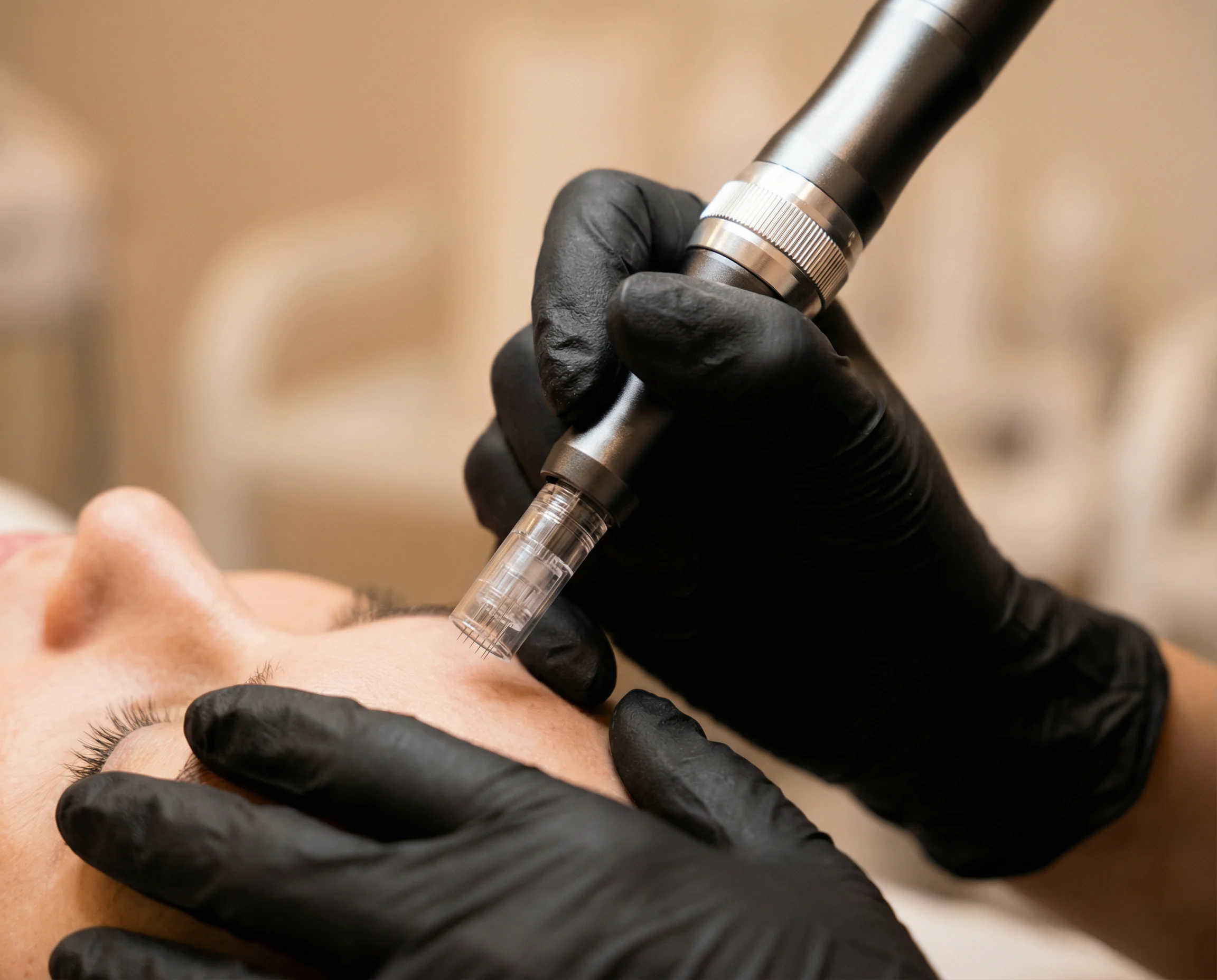
Microneedling, also known as collagen induction therapy, is a minimally invasive procedure that uses tiny, sterile needles to create controlled micro-injuries in the skin. These micro-wounds trigger your body's natural healing response, stimulating new collagen and elastin, the proteins that keep skin firm and smooth. Over time this can lead to improved texture, softer fine lines, and a more even appearance.
For traditional microneedling we use the SkinPen Precision system, which is FDA-cleared to improve the appearance of facial acne scars in adults 22 and older. As the needles puncture the surface, they create thousands of microscopic channels, and the body responds by sending its own healing and growth factors to the area.
What traditional microneedling is used for:
- Collagen and elastin stimulation. Controlled injury prompts the skin to produce fresh collagen, which is the mechanism behind improvements in firmness and fine lines.
- Texture and tone. It targets rough patches, the look of enlarged pores, and uneven tone.
- Scars and stretch marks. Commonly used for acne scars, surgical scars, and stretch marks. SkinPen's FDA clearance is specifically for the appearance of facial acne scars.
- Not dependent on light or pigment targeting. Unlike light-based devices, microneedling does not work by targeting melanin. Your provider will still assess your individual skin and history before recommending it.
- Minimal downtime. Usually a few days of redness, similar to a mild sunburn. Many people return to normal activities the next day, which makes it practical for busy schedules in Santa Cruz or Silicon Valley.
What is RF microneedling? (Radiofrequency)
RF microneedling combines the collagen-inducing mechanism of microneedling with radiofrequency energy. A device delivers fine needles into the skin as standard microneedling does, but the needles also emit RF thermal energy into the dermis. We use Cutera's Secret RF system for this treatment.
How it works. The device has insulated needles that penetrate to a precise, adjustable depth. Once in place, radiofrequency energy is released from the needle tips into the surrounding tissue, producing a zone of controlled thermal injury alongside the mechanical channel.
What the difference actually is. This is worth being precise about, because it is usually described as RF simply going "deeper." Histology suggests otherwise. In an IRB-approved 2019 study published in Aesthetic Surgery Journal Open Forum, Sasaki examined both treatments and found that RF microneedling channels "reached dermal depths close to the 0.5- or 1.5-mm needle lengths" — the same depths as needles alone — but "additionally exhibited coagulation injury at the distal end of the channel."
So RF is not microneedling that reaches further down. It is microneedling that adds thermal injury at the base of each channel. That is a real and meaningful difference in the kind of healing response produced, and it is a different thing from depth.
What RF microneedling is used for:
- Collagen remodeling with a thermal component. The addition of heat targets collagen remodeling through a different pathway than mechanical injury alone.
- Texture and scar work. Often selected for deeper scarring and stretch marks.
- Skin laxity. The thermal component is the reason RF is typically chosen when laxity is the primary concern rather than surface texture.
- Adjustability. Depth and energy are set by the provider and adjusted by area, including more delicate regions such as around the eyes and mouth.
Microneedling vs. RF microneedling: key differences
Both stimulate collagen. They differ in mechanism, downtime, and what they are typically selected for.
| Feature | Microneedling | RF Microneedling |
|---|---|---|
| Technology | Mechanical needles | Needles + RF thermal energy |
| Mechanism | Mechanical micro-injury | Mechanical injury + coagulation zone at channel base |
| Depth | Provider-set, adjustable | Provider-set, comparable depths |
| Typically selected for | Texture, fine lines, superficial scarring | Laxity, deeper scarring |
| Downtime | 1-3 days redness | 2-5 days redness, sometimes tiny scabs |
| Comfort | Numbing, then mild prick | Numbing, then prick plus warmth |
| Cost per session | $$ | $$$ |
- If your concerns are texture, fine lines, or superficial scarring, and you want a treatment with quicker recovery, traditional microneedling is a reasonable starting point — particularly if you are new to skin treatments or have sensitive skin.
- If laxity or deeper scarring is the primary concern, RF microneedling is more often the treatment selected, because the thermal component addresses something mechanical needling does not.
Which one suits you is a clinical judgment about your skin, your history, and what you are trying to change. It is not a tier list, and a consultation exists to make that call properly.
Where growth factors fit — and the exosome question
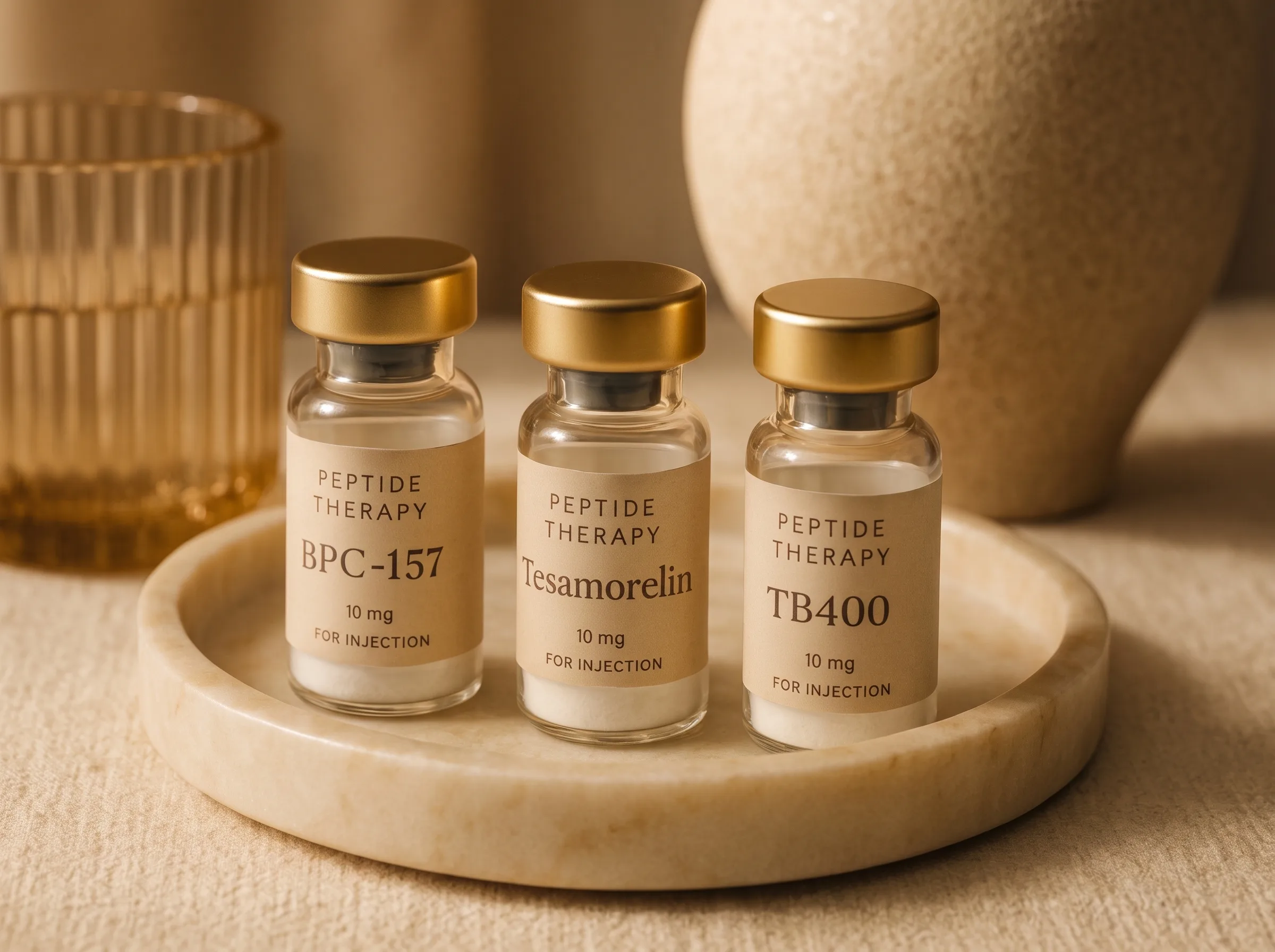
Because microneedling creates temporary channels, it is common to apply a topical during or immediately after treatment. At Beauty Lounge that is a growth factor serum.
The useful thing to understand is the order of operations. Collagen induction is driven by the controlled injury — it is the mechanism the treatment is named after, and it is what both microneedling and RF microneedling are doing. What gets applied alongside it works with that process rather than replacing it.
Growth factors and exosomes are not two competing options. People often search for these as though the choice were "exosomes" or "RF microneedling," and that framing does not hold up: a serum applied during a treatment is not an alternative to the treatment itself. They sit on two different axes. One is which modality you have — needles, or needles plus RF. The other is what is applied with it. You are making two decisions, not one, and collapsing them is why the comparison feels confusing.
The two terms are also closer than the marketing makes them sound. Exosomes are the vesicles that carry growth factors, the signaling proteins that do the actual communicating with cells. We lead with the growth factor term because that is the part doing the work. You can read more about what we use on our growth factors page.
So if you are weighing "exosomes vs. RF microneedling," the more useful pair of questions is: which modality suits my skin, and separately, what is being applied with it?
Enhancing recovery with CO₂ lift masks
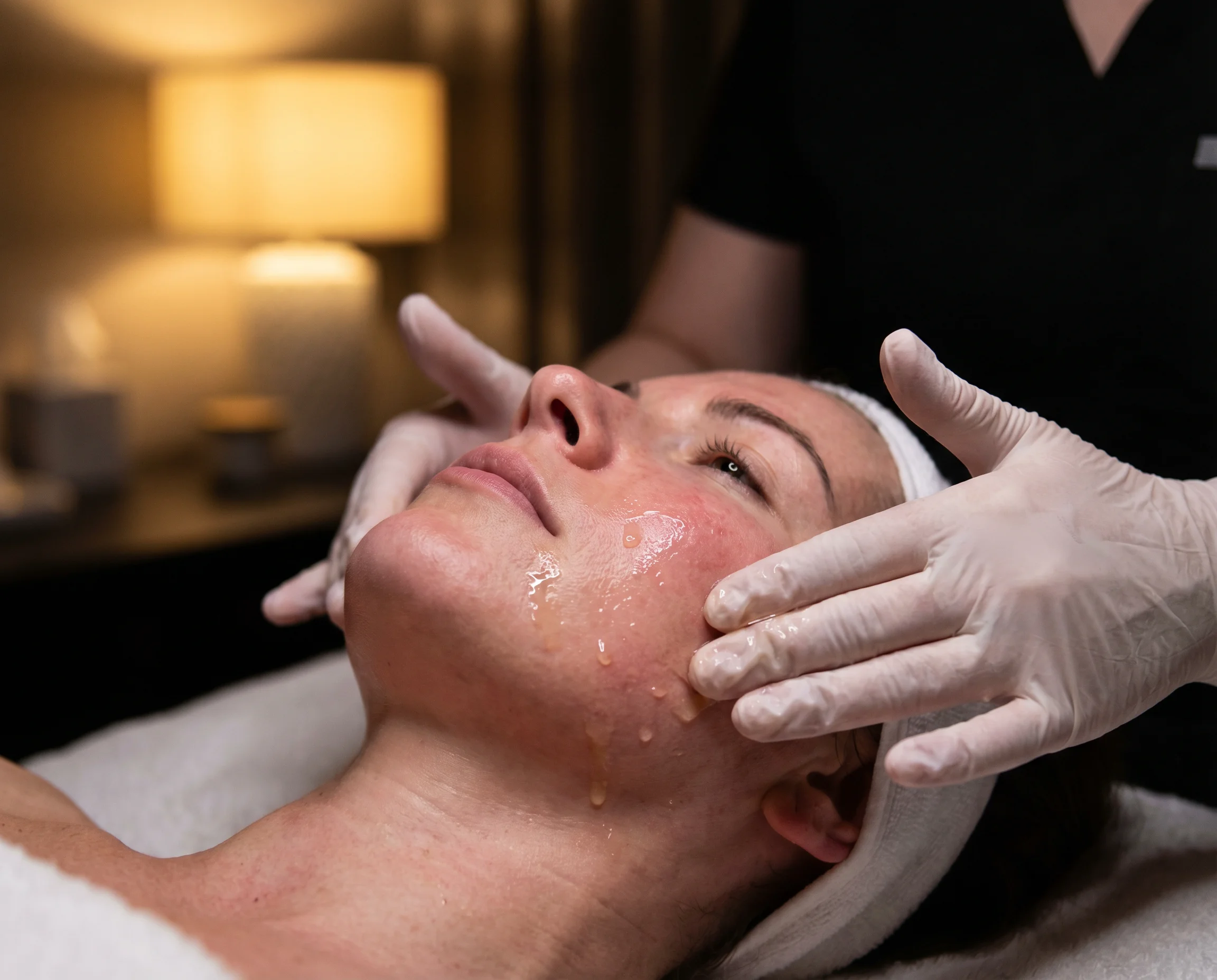
Another common addition is the CO₂ lift mask, a form of carboxytherapy that applies a carbon-dioxide-rich gel to the skin. After a microneedling session, when skin is sensitive, a CO₂ mask is used to soothe.
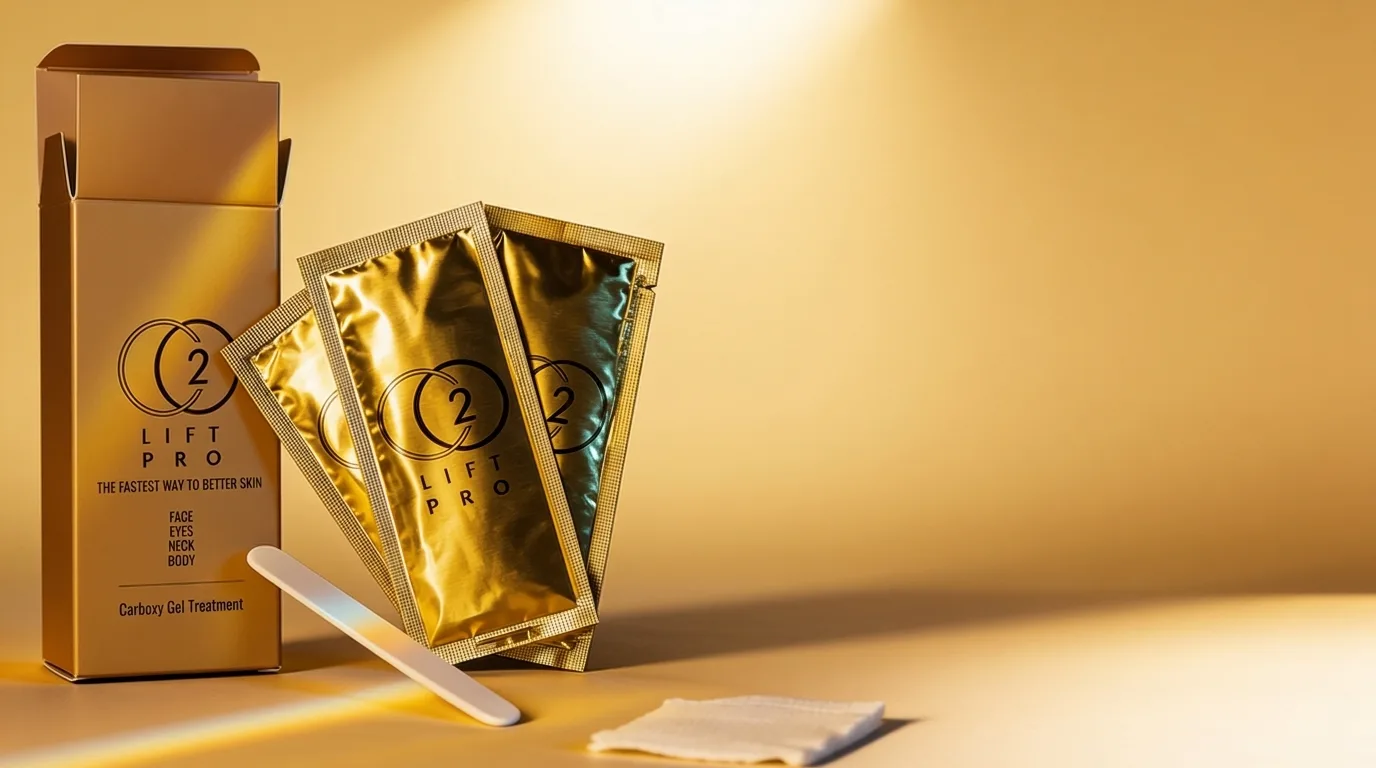
How CO₂ masks work. The gel creates a localized buildup of carbon dioxide at the surface. The proposed mechanism is the Bohr effect: tissues respond to elevated CO₂ by increasing local blood flow, bringing oxygen and nutrients to the area.
Why it's used after microneedling:
- Comfort and hydration. It is applied to calm the skin and hydrate it while the barrier recovers.
- Circulation. Increased local circulation is the mechanism behind the immediate post-treatment appearance many people notice.
- Easy to add. The gel sits for roughly 30 to 45 minutes, it is gentle enough for delicate areas, and it does not add downtime.
We often include a CO₂ lift mask with microneedling because it complements the recovery period.
Maintaining results with medical-grade skincare
In-office treatments are periodic; daily skincare is continuous, and it is what maintains the condition of your skin between sessions. That is where a medical-grade line like ZO Skin Health fits. Developed by dermatologist Dr. Zein Obagi, ZO offers products formulated to complement in-office treatments.
Why medical-grade? These products carry higher concentrations of active ingredients than most over-the-counter options and are formulated for better penetration. A consistent regimen supports the skin between treatments and helps maintain what your treatments achieve.
If you are in Santa Cruz, Monterey, or Santa Clara County, you can find the ZO line in our shop or at our office in Aptos. RF microneedling in Santa Cruz is commonly considered for acne scars, fine lines and wrinkles, sun damage, uneven tone, and the appearance of enlarged pores.
Bringing it together
Microneedling and RF microneedling are both collagen-induction treatments, and the honest difference between them is the thermal component, not depth and not the serum used alongside. Traditional microneedling targets overall texture and superficial scarring with less downtime. RF adds a coagulation zone at the base of each channel, which is why it tends to be selected when laxity is the concern. Add-ons like growth factors and CO₂ masks support the treatment and the recovery; they are not what drives the result.
Which is right for you depends on your skin, not on which sounds more advanced.
Ready to book?
Whether you are in Santa Cruz County, Monterey County, or Santa Clara County, our team in Aptos will assess your skin and build a plan with you. Explore microneedling and RF microneedling, or book a consultation.
This article is general information, not medical advice, and describes mechanisms rather than promised outcomes. Individual suitability and results vary. Talk with a licensed provider about your specific situation.
Ready when you are
Book a consultation with our team in Aptos and we'll build a plan around your goals.